
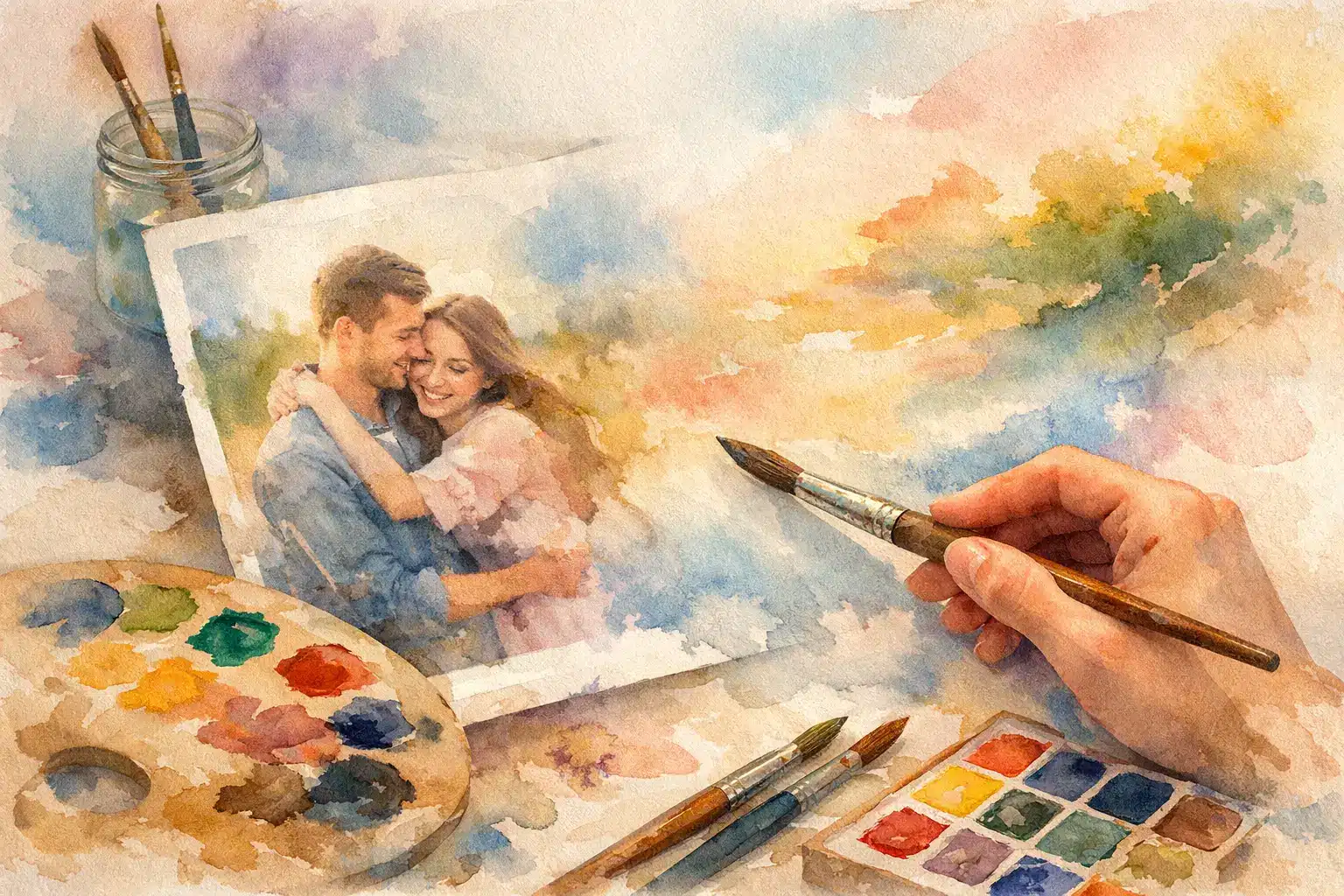
A favorite photo can hold a whole chapter of a life: the tilt of a beloved dog’s head, a child’s laugh caught mid-motion, the quiet closeness of a wedding-day portrait. Learning how to turn photos into paintings begins with recognizing what makes that image worth preserving. A painting is not simply a copy of a photograph. It is a handcrafted interpretation that gives a memory more presence, warmth, and permanence.
Whether you are choosing a meaningful anniversary gift, honoring a pet who is dearly missed, or creating artwork for the heart of your home, the best results come from a thoughtful photo and a clear sense of what you want the finished piece to feel like.
How to Turn Photos Into Paintings With Meaning
The simplest route is to use your photo as the reference for a custom, hand-painted portrait. An artist studies the image, then builds the artwork with paint, color, texture, and careful attention to the details that make the subject recognizable. Unlike an automated filter, a hand-painted piece can soften distractions, refine lighting, combine elements from several photos, or bring forward the personality that a camera only captured for a second.
Start by asking yourself what you want the painting to celebrate. For a pet portrait, it may be the alert ears, soulful eyes, or a familiar expression your family knows immediately. For a family portrait, it may be the feeling of everyone being together, even if no single photograph has every person looking their best. For a memorial painting, gentleness and likeness often matter more than reproducing every background detail exactly.
That purpose guides nearly every decision that follows, from the photo you choose to the style, size, and color palette of the final artwork.
Choose a Photo That Gives the Artist Something to Work With
A professional artist can make thoughtful improvements, but the photo still matters. A clear image with good light provides the strongest foundation for an accurate and expressive painting. Ideally, your subject’s face or eyes are visible, the image is not heavily filtered, and the details are large enough to see when the photo is enlarged.
Natural daylight is especially helpful because it reveals true fur color, skin tone, and facial features. A photo taken near a window or outdoors in open shade often works beautifully. Sharpness matters, but do not dismiss a treasured photo too quickly. If it is the only image that captures a loved one’s unmistakable spirit, it may still be possible to create a beautiful portrait from it, especially when paired with a few additional reference images.
When selecting between several photos, choose the one with the strongest expression rather than the most complicated setting. A busy restaurant, cluttered living room, or crowded park may belong to the memory, but it does not always need to appear in the painting. A simple background can give the subject room to shine.
If your favorite photo is imperfect, tell the artist what cannot be lost. Perhaps your grandmother always wore a particular necklace, your dog had one white paw, or your child had a distinctive curl at the front of their hair. Those small details often carry the greatest emotional weight.
Decide What Should Stay and What Can Change
A commissioned painting gives you choices a photograph cannot. You may want the background simplified to a soft neutral color, a garden, a favorite beach, or an impressionistic wash that complements your decor. You might want to remove a leash, a distracting person, a harsh shadow, or an object that pulls attention away from the subject.
You can also combine photos when a single image does not tell the whole story. Families often provide separate photos of relatives who could not be together. Pet owners may have one photo that shows their pet’s coloring well and another that captures their best expression. An experienced portrait artist can use these references carefully, while making sure the finished composition still feels natural.
There is a balance, however. The more dramatic the changes, the more artistic interpretation is involved. Combining people photographed in very different lighting, angles, or image quality can be done, but it requires extra planning. Sharing your hopes early allows the artist to recommend an approach that honors the memory rather than forcing it into an unrealistic scene.
Select a Painting Style That Feels Like You
The right style is personal. Realistic portraits are a wonderful choice when likeness is the priority. They preserve the individual features, markings, and expressions that make a person or pet instantly familiar. For memorials and milestone gifts, realism can feel especially moving because it creates the sense of seeing someone you love in a new, lasting form.
Impressionistic portraits offer a softer, more painterly feeling. Brushwork, glowing color, and gentle movement can make the piece feel romantic and expressive without losing the character of the subject. This style often suits wedding portraits, children, gardens, and homes that favor a relaxed, artful look.
A masterwork-inspired approach can add another layer of personality. A pet may become a dignified figure in a classic portrait setting, or a family photo may take on the rich mood of a traditional painted composition. This option is especially memorable for gifts, but it works best when the style supports the subject rather than overwhelms it.
If you are unsure, think about where the painting will live. A formal, realistic portrait may be perfect over a mantel or in a traditional dining room. A vibrant, expressive piece can bring warmth to a hallway, bedroom, or gallery wall. The most beautiful choice is usually the one that feels true to the person, pet, or moment being remembered.
Choose the Right Size for the Story
Size changes the experience of a painting. A smaller portrait can be intimate, giftable, and ideal for a bedside table, bookshelf, or special corner of a home. A larger canvas creates a stronger focal point and gives an artist more room to capture detail, texture, and atmosphere.
Before ordering, consider the wall where the artwork will hang. Measure the available space and imagine the painting in relation to nearby furniture. If it will be part of a collection of framed photos and art, choose a size that complements the grouping. If it will stand alone above a sofa, fireplace, or bed, a larger scale may better match the room.
It also helps to think about the number of subjects. A single pet or child can look lovely in a smaller format. A couple, family, or multiple pets may need more room so each face feels carefully rendered rather than crowded.
Work Directly With the Artist
The most meaningful part of turning a photo into a painting is the conversation behind it. Share the occasion, the relationship, and the details that matter to you. Let the artist know whether the artwork is a surprise gift, a memorial, a wedding keepsake, or a piece meant to welcome visitors into your home.
A good commission process should feel personal, not intimidating. You should be able to provide your photos, discuss style and background preferences, ask questions, and feel confident that your vision has been heard. Maryanne Chisholm Art approaches each portrait as an individual story, with one-on-one attention that helps clients move from a treasured image to a gallery-quality painting made with care.
Be open about your budget and timeline as well. Hand-painted artwork takes time because every layer, feature, and finishing touch is created deliberately. Planning ahead is wise for holidays, anniversaries, weddings, and birthdays. If a special date is approaching, asking early gives you more flexibility around size, style, and delivery.
Why a Hand-Painted Portrait Feels Different
Photo-to-painting apps can be fun for a quick social media image, but they cannot replace the judgment and care of an artist’s hand. Digital effects tend to apply the same treatment to every face, every pet, and every background. They do not understand which expression makes your father look like himself, why a certain worn collar matters, or how to bring grace to a memorial portrait.
A hand-painted work is built through decisions made specifically for your image. The artist can adjust composition, balance colors, create depth, and emphasize the qualities that deserve to be remembered. The result is not just decorative. It becomes a tangible reminder of connection, made to be displayed, gifted, and held onto for years.
When you choose the photo that makes your heart pause, you have already found the beginning of the painting. Let the next step be giving that memory the patience, artistry, and care it deserves.